Believe it or not, I thought about aspects of this post for a while and began composing it on January 6 … or what ended up being the day of the “showdown” on the Capitol. I’d been reflecting on ways to process some big thoughts about on-going racism in America, confronting that being an ally to any community means more than not being an outwardly horrible person, and once again thinking about what it means to take steps out of my own comfort zone.
And then raging idiots with weaponry and delusions and horrible ideas about their rights, spurred on by their dear leader President 45, went from their right to protest to storming the U.S. Capitol. They attempted a coup to overturn the electoral votes that elected Joe Biden and Kamala Harris.
Ignorance, white privilege, and a lack of regard for health and safety were on full display.
And I got overwhelmed and ditched the beginnings of that draft.
Since that day, I’ve been thinking about how complex it can be to confront racism in these times. I’ve had countless conservatives tell me that drawing attention to the problem of racism (or sexism, or homophobia, or classism) only seeks to further divide people. I am legit tired of that bullshit excuse, which allows people to ignore and play down the very real experience of being black (or even simply *not white*) in America.
I’ve also been told to not use buzzwords like “privilege” or “micro-agressions” if I want to have a real conversation about race. I am also tired of that bullshit, because I wasn’t born understanding those concepts. White folks all have something to learn. I have, and I continue to.
I’ll paraphrase poet laureate Maya Angelou: when you know better, you do better.
If we can’t even agree that racism is still a problem in America, this blog and post probably aren’t for you.
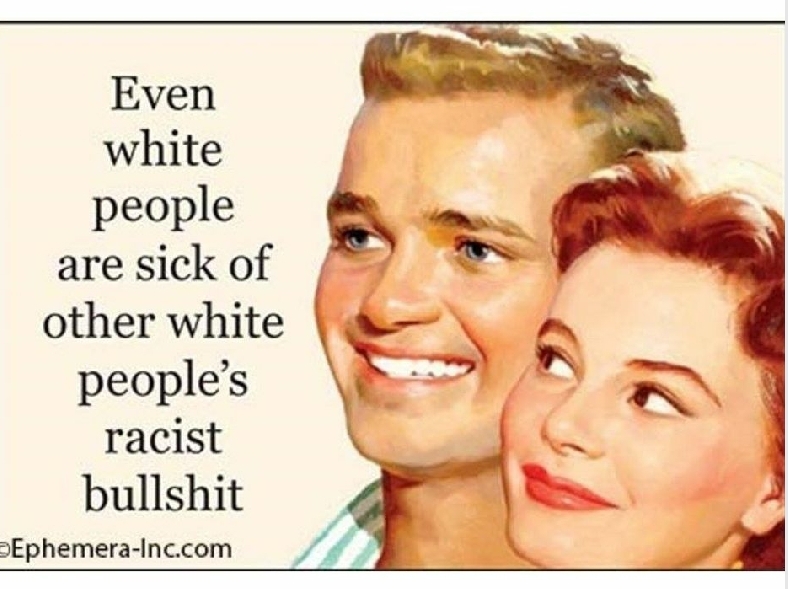
Alas, here we are. And it’s Black History Month too, and there’s still a blog (or more) to write!
Despite the civil rights movement, despite social programs, despite lip service to equality and all people being created equal – the problem of racism does still persist. It is intertwined in all kinds of frustrating and fascinating ways with gender, finances, class, education, and other areas of privilege.
And because some of us are lucky enough to recognize our privilege in this country, and see the on-going defensiveness and disparity, we feel the call to respond to the need for ally-ship.
Growing up, I was lucky to not hear overtly racist or hateful talk in my home or in my church. But I did know what the “good” side of town was, and knew I went to the “good schools.” I did intuit a lot of powerful messages about where it was okay to travel, and who it was okay to associate with, and what kind of music was okay to listen to. There were a lot of values tied in intricately with racist systems.
Growing up, I would have been the first kid to preach that all are equal, and white is no better than black or brown. I probably would have espoused the importance of being “color blind.” (Ack.) I would have happily quoted Dr. King and said all opportunities should be open to everyone. I would have volunteered to help in any setting where people were underprivileged. And some part of me thought dating and loving someone who was half-black made me wiser and proved me “not racist.”
In many circumstances, I could see my privilege, but I didn’t necessarily know what to do with it.
I started out with a bit of a white savior mentality, and for that, I definitely repent.
It’s definitely easier in many ways, to live in the safety and comfort of privilege. Choosing to wander outside it, say the wrong words and do the wrong thing, can be so humbling, embarrassing, and frustrating.
I’m thankful I, at minimum, to have the openness to see that that kind of discomfort is vastly easier than living a life that systematically challenges my ability to literally survive and thrive in society.
I think back to my time at Wittenberg University. No, not in Germany – a small, wealthy Lutheran school in the very divided dying industrial town of Springfield, Ohio. Because my psychology degree was exposing more of my personal interest in hands on social work with in-need populations, I took an interest in service and in Urban Studies (which, I believe, was only a minor studies program at that time). It was either in my junior or senior year. Springfield’s mayor at the time, Dr. Warren Copeland, was the professor.
Wittenberg had a strong international program, but the actual student body was not terribly diverse. I don’t have statistics handy, but it was more diverse than my “good” high school which had about 4 black people in my senior class. (Yeah, honestly. More of our student minorities were Indian and Asian.) Though many people think Ohio and think rural farmland, Ohio actually does has some diversity, in part because it has several bigger cities. Wittenberg had a chapter of “Concerned Black Students” and a Black Culture House, and a few traditionally black greek chapters. But this class, Racism and Social Ethics, was easily the most diverse class I had enrolled in.
I don’t remember tons of things about the class, but I do remember Dr. Copeland using film to expose hardships and new perspectives, including a viewing of Spike Lee’s “Do The Right Thing.” There was history, amplifying black voices and leaders in the Civil Rights movement. I recall conversations about solutions for black communities, as opposed to slapping band-aids on systemic problems.
I remember the majority of “polite” white students letting black students speak. But not because we were necessarily hearing their experiences. I remember not wanting to speak up because… we were afraid of saying the wrong things in the presence of our black peers.
And I remember we were called out on it.
Wow. It was… something. But I was a good person, right? I did “the right thing”, right?
But I was risk-averse. I was very comfortable being helpful, being a savior when I could, but to have to confront that white people like me are capable of doing a hell of a lot of harm by staying quiet and being “polite” in the face of inequality and injustice?
Oof.
I remember that day.
And not knowing what to say.
And not being coddled, or congratulated for “trying” to do the right things.
I remember being told being decent and polite just wasn’t enough.
I remember a few “braver” white voices speaking up in acknowledgment and/or defense, and getting told right back, “No. Enough excuses.”
And I remember feeling my instinct to escape the discomfort kick in. Or to recognize the history of our country was intense and say “it’s just too hard and complex.” To throw my hands up and give up, so I could escape discomfort and my life could go back to normal.
But not everyone has that privilege.
Not everyone gets to go back to normal:to a life where they’re not harassed or finding their lives endangered for shopping/driving/walking/existing while black.
Real life brings a lot of legitimate lessons, but that day in that classroom, something in me changed. I didn’t leave class and walk home, and become an empowered super-ally. I left feeling heavy and problematic and blamed and guilty.
My journey has continued since that day.
I think being an ally means that:
- I am a work in progress, striving to unlearn the horribly untrue things that being white in this country teaches you about your innate value.
- I am striving to listen and read and learn and BELIEVE black voices and experiences. Just because I have not experienced the micro-agressions, and the slurs, and even the horrors of my black brothers and sisters does not mean that these aren’t legitimate experiences that need attention and change.
- I don’t get to come in and set the agenda. I need to get out of the way, but not run away. I humble myself, learn, and look to communities who know, first hand, the experience of being black in America. And I follow their lead.
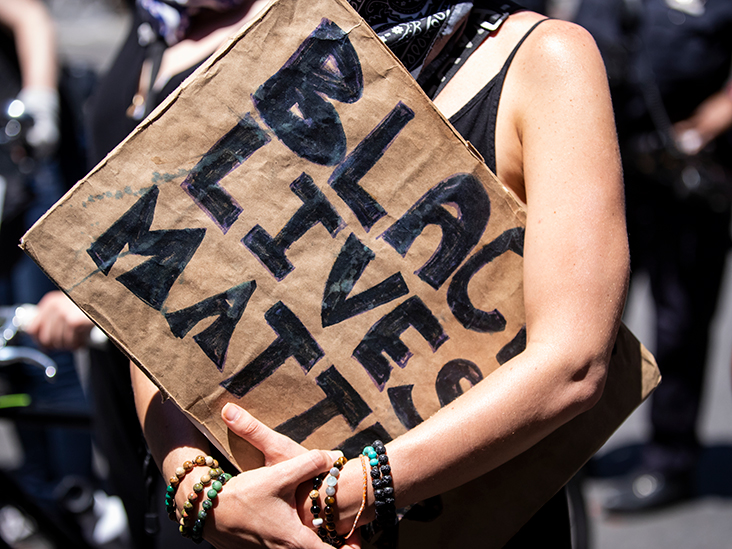
- I need to use my voice and privilege for those who do not have a voice or privilege, so yes, I will say “Black Lives Matter” and not apologize for it. I will speak out against police violence. I will speak out against workplaces or schools or churches that benefit from discrimination practices.
- I will put signs in my yard that reflect my values and wear t-shirts that have the potential to start conversation or make me a visible ally.
- I will expose myself to black writers, artists, leaders, and creators.
- I support and amplify black voices and black businesses and black communities.
It also means I repent.
- I repent for my white tears, for my “not all white people” mentality.
- I repent for my appropriation, for my defending white girl dreadlocks because I thought they were pretty, and it was “just a hairstyle that anyone can have.”
- I repent for thinking “reverse racism” was a thing, when I encountered legitimate and necessary black anger.
- I repent for microaggressions I made out of not understanding culture outside my own.
- I repent for “tone policing” and thinking non-violence and calm voices are always the answer, especially in the face of such egregious violence against people of color.
- I repent for my choosing the comfort of silence in the face of loud, overtly, hateful voices.
- And as I said earlier, I repent for thinking that being “polite” and not overtly racist was enough.
And I know there’s more.
At the beginning of this month, I shared on social media that I vowed to shut up and listen, and to keep learning, and to be a part of the solution.
White folks, please try listening and learning and doing more than plugging your ears.
And for now, I’ve said enough.

 alive. awake. uncomfortable.