I find myself sometimes wondering how I come off to those of you who read my posts, but don’t know me personally. Or maybe you knew me in a walk of life long past – and we haven’t seen each other in a long time.
I say this because I know, as I think and write, I may fall into the habit of coming off like it’s not such a hard thing to inhabit uncomfortable spaces. And I think, with practice, “going there” can become something that we run away from less, recognizing it won’t generally kill us.
But that doesn’t make getting smacked with discomfort a simple, or easy thing.
That’s why it’s discomfort.
I wonder if I come off this way, because I do consider myself to be a sensitive person; sensitive to discomfort in many forms.
Physically, I hate being hot and sweating. I don’t have an especially high pain tolerance. I’m not good at being sick; I haaate throwing up. Emotionally, I don’t like feeling gained up on, being needled by people who are argumentative and flex their intelligence over my feelings. I hate losing my temper, crying in public, feeling lonely in a crowd. I don’t like looking incompetent, feeling jealous, or unable to control a public situation.
So if that doesn’t make the case for my being considered sensitive, maybe an early life memory would.
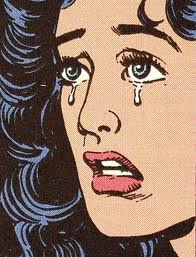
An adult I love and admire very much once reached a moment of imperfect frustration with me as a kid, and hurled the words at me: “You’re just too sensitive! This is impossible!”
This was over… what? That part of the memory didn’t stick.
But the words did.
The message did: My sensitivity made me impossible. My sensitivity was a deficit, a weakness.
Their actions stuck. Throwing their hands up, walking away.
The message: I’m too hard to be around. My sensitivity is too much.
As a parent to four wildly unique kids, I do have grace for the person who deemed me “too sensitive.” Parenting isn’t always a rational or simple thing; time can be pressed, frustrations can peak, words can come pouring out, and people can need to walk away and take a break.
But as a kid, I didn’t know this. Nonetheless, the words and actions were formative for me, and – along with the world’s messages about sensitivity – were probably a big part of me as seeing my sensitive ways as a problem.
Anyway, all this to say, I don’t see myself as overly sensitive – like, unable to function or crying at the drop of the hat – but I do hold on to things, overthink things, and can feel things in a big way.
As I got older, I found myself trying not to show my sensitivity.
Hiding opinions and true feelings from peers. Trying to keep the peace at all costs, even if it meant betraying my wants or needs. Erring on the side of people pleasing, when the people weren’t even worth pleasing.
Sometimes this also manifested as loudness, sarcasm, and other self-protective measures; fighting or being outgoing when it would have been harder to show a more vulnerable emotional response.
In a world that values “thick skin” over “thin skin” these adjusted responses took a toll.
As time went by, and I encountered minds and thoughts and worlds greater than my own, I learned how my sensitivity can actually be a great gift.
I learned how sensitivity can connect me to others, build deeper relationships, and spur me to action when there are needs I can help meet.
It helped me figure out (and accept) some of my gifts and my calling to go back to school to become a therapist.
Being sensitive in a noisy, busy, brash world can be difficult. I won’t lie.
I’m reminded of a book I read earlier this year: Obsessed by Allison Britz. I picked it up on a whim, but am so glad I did. It’s the story of a high school age girl who develops a rapid-onset of Obsessive Compulsive Disorder (OCD) and the debilitating ways it spirals her life out of control.
She can’t wear certain clothes, she can’t eat, she can’t sit it chairs. Certain colors must be avoided. Her mind has convinced her doing these things will give her cancer or harm the people she loves and cares about. It’s a lot.
Anyhow, I’m reminded of it because as Allison finally confides her bizarre thoughts and inflexible repetitive rituals, and recognizes she needs help and treatment, she begins seeing a therapist. This therapist teaches Allison to use Exposure Response Prevention (ERP) therapy to help her in moments of immense stress.
This means naming her triggers (what makes her anxious), her obsessions (the thoughts about cancer or danger), compulsions (her responding action), and the temperature (the intensity of her emotional reaction).
As Allison becomes adept at identifying these triggers and responses, she learns to expose herself to the intensity without engaging in the compulsive response.
She learns to take time, and let the intensity of those moments pass and learns to watch (and trust that) the temperature always drops.
It isn’t a quick process. ERP takes a lot of practice. But it also begins, over time, to allow her to cope with the many triggers, eventually leading her to some normal semblance of life again. It gives her her power back.
I think allowing ourselves to be vulnerable to our sensitivities is like that.
It takes practice.
Lots and lots of practice.
This can look like practice sitting quietly with our grief or intense emotions without turning to avoidance, or destructive responses like substance use or self-harm. This can look like not spinning into a cycle of negative self talk when we feel embarrassed or mortified with ourselves or our situation. This can look like not dissociating or running away from what we most want to escape.
This can look like remembering we are indeed resilient and will survive our public tears, our feelings of cheek-flushing envy, our most painful and deepest discomforts.
This can look like self-compassion that reminds us we are not alone in our struggles, and that everyone has “things” that set them into the throes of awkwardness.
This can look like remembering the pain and discomfort will, just like Allison’s triggers, subside.
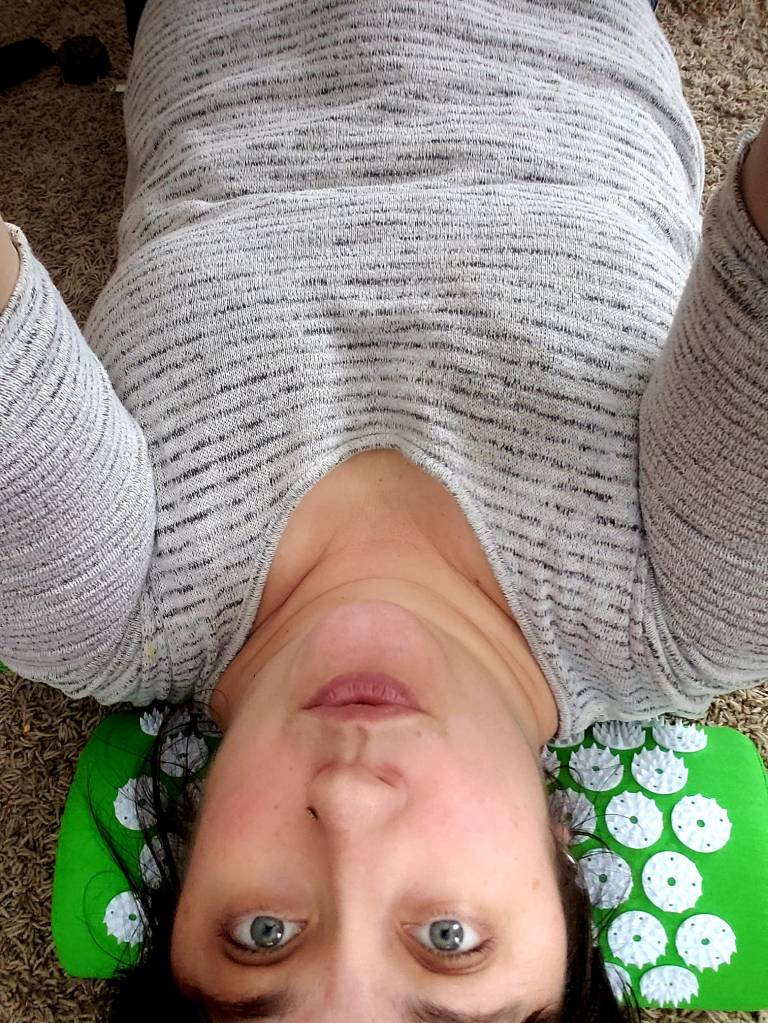
I was given an acupressure mat last Christmas. And learning how to lie on that thing …. oww! No lie, I kind of wondered what I got myself into. Prickly intense pain, nerves firing wildly, sending my brain the message, “Make it stop! Quick, get off this thing!””
But when you actually stay on “that thing”?
Your back and neck feel blood rush to those affected areas, you warm up, and you start to melt into a deep relaxation.
But you have to stay with it, and get aquainted with the transition from pain to release.
Emotionally, I get lots of chances to practice this with my brood. Kids can be so humbling, depending on how they choose to “shine” when we’re in public and feel like we’re “on display” to the world. My kids – or the darlingquents as I’m known to refer to them – all have their quirks and habits. However, one of my children (only one to my knowledge thus far) is neurodivergent, and is on the Autism spectrum.
While every parent learns that every child is their own person, and isn’t truly ever under their control, I am still sometimes embarrassed to realize I can’t “rein in” my 10yo. While my other children might be more susceptible to social pressure or concepts like manners or niceties, that stuff mostly just bounces off him.
I can’t reason him out of tics, or speech therapy him out of talking nonstop over his peers. I can’t un-obsess his obsessive interests, I can’t redirect his stims. I can’t control him.
And this may make me an imperfect parent (spoiler: it’s not the only thing by a long shot!) but sometimes it just embarrasses me that I can’t stop him and make him over into a perfect little citizen.
He is who he is. And he’s taught me a lot about giving up control, and remembering that even if I find myself uncomfortable or worked up, that it will pass.
He is who he is. And I love him not in spite of it, but increasingly, because of it.
I am who I am. Sensitive, easily uncomfortable, sometimes too aware of my thoughts and feelings.
And I can see my sensitivity as a strength, and love me too.
Maybe I wasn’t born with a “thick skin” but maybe – with practice and compassion – my thin skin can also suit me, and this world, just fine.

 alive. awake. uncomfortable.